Sharon Harrigan

Author Website

  • Bio
  • Books
    • Forthcoming
    • Half
    • Playing with Dynamite
  • News & Interviews
  • Writing
  • Editing Services
  • Blog
  • Events
  • Contact

August 14, 2012 By Sharon Harrigan

Paris Journal: Doctor’s Visit


You don’t know how foreign a country is until you experience it with a sick child.

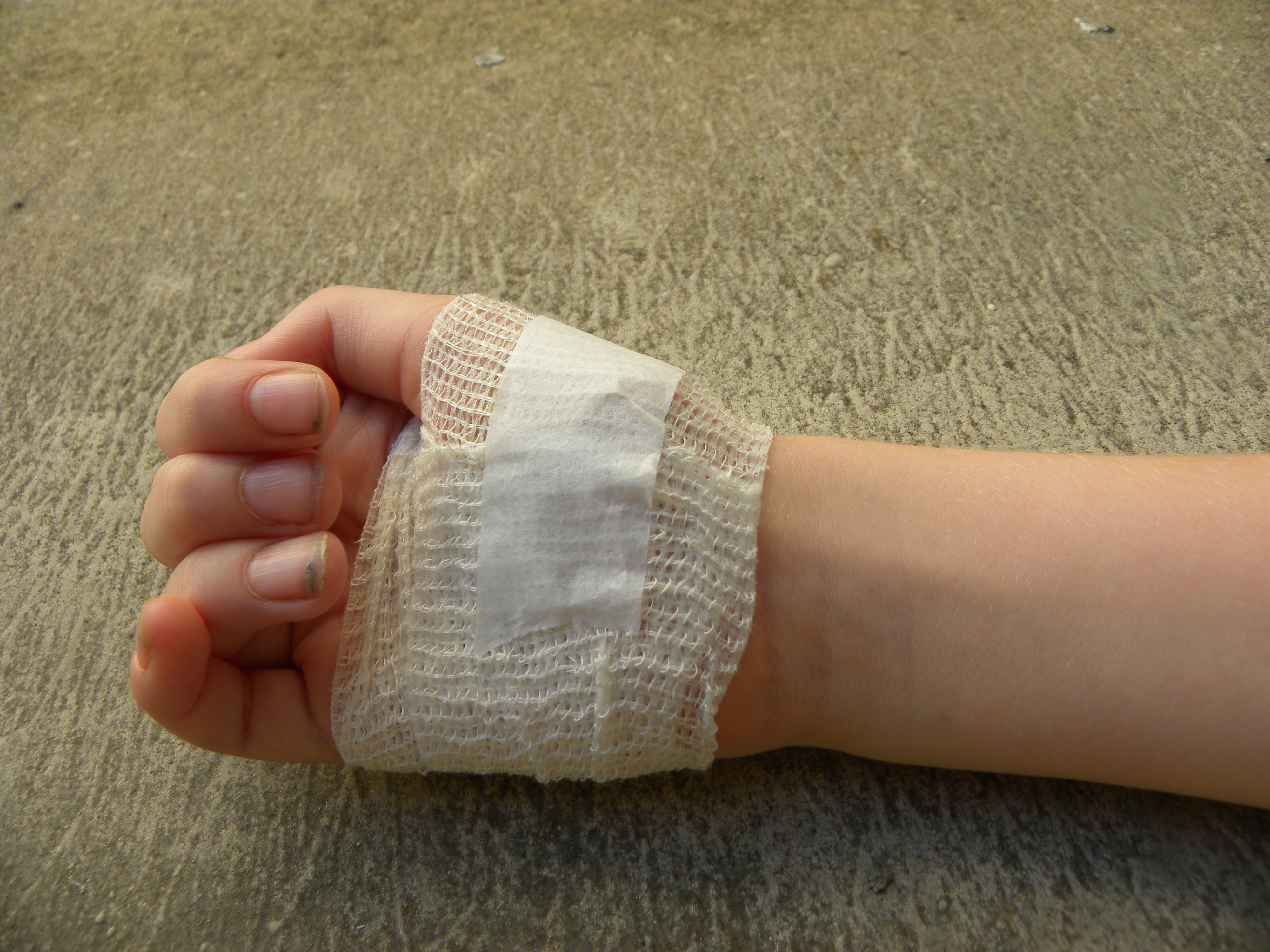
Last Friday, Ella had a throbbing pain in her right palm. She couldn’t sleep, and her face was red with fever.

Where would we go? Weren’t Parisian doctors at the beach for all of August? The whole city seemed emptied for les vacances.

We finally found a doctor, not the one recommended by our friends who lived here last year (she was on vacation, of course), but another, one Metro transfer away. She gave us an appointment for an hour later.

On the Metro we sat next to a girl clutching a flowered backpack, in shorts and sneakers, traveling by herself. Ella didn’t agree that the girl looked about nine. Maybe Ella thought if she admitted that girls her own age rode the Metro alone, I might make her do the same.

I was surprised when Dr. Masson greeted us herself, the receptionist perhaps at the beach with the rest of Paris. We waited only ten minutes, less than I would expect in the U.S. Dr. Masson asked a few questions and typed our answers into her computer. Ella explained (in English) that she will soon start attending a bilingual school, where she will learn French. “But surely you know some French,” the doctor continued, in French. “No.” That’s all she said, but I inferred, “Ask me to try any other day, when I’m not sick.” During our week in Paris so far, she had been showing off, talking to shopkeepers and waiters, asking for directions to the bathroom by herself. But not today.

“Has she ever had des verrus?” the doctor asked, examining Ella’s palm. “I don’t know that word,” I said, looking it up. “No, she’s never had warts. I think it’s an old splinter.” Une echarde. I’d looked up that word before I left our apartment. “I think the splinter caused an infection, c’est pourquoi she has a fever.”

The doctor pulled a few squat bottles and long syringes from a drawer. “It’s just like at the dentist,” she said to Ella, as if this would reassure her. “I’ll give you a shot, so you won’t feel a thing.” Ella has never gotten a shot from a dentist, since she doesn’t have cavities. But that’s not why she gave me a puzzled look. It’s because she didn’t understand a word.

So I translated. The doctor numbed part of Ella’s hand and pulled out a scalpel. “You feel my finger ici?” the doctor asked. “Does it hurt where she’s touching you?” I translated. “Yes,” Ella said. So the doctor gave her another shot, more local anaesthesia. Finally, “Ici? Ici?” asked the doctor. “Here? Here?” “No,” Ella said. Then she sucked in her breath and bit her lips at the sight of the knife: the same response in any language.

The doctor excavated two splinters and displayed them to us. “You want to take them home or put them in la poubelle?” “The garbage,” Ella said.

“When you take this to the pharmacy,” the doctor said, handing me the prescription, they might tell you it’s wrong, but it’s not. She needs a very strong antibiotic for a very bad infection.”

“It’s a very bad infection?” I asked, not translating for Ella, hoping she wouldn’t worry too much.

“It’s not so bad yet,” the doctor said, but it’s close to an artery that leads to the heart.”

We paid and thanked her, then walked out onto rue Violet.

“Close to the heart,” Ella echoed the doctor, leaning against me on the Metro, glad, I’m sure, to be with her mother and her mother tongue,  in a city so big, with a language so new and strange.

So she’d understood, after all. At least a little bit. Maybe she thought she’d be left on her own, like the little girl on the train, if she could follow the doctor’s words without help. “We caught the infection in time,” I said, hoping Ella inferred “I’ll never leave you alone,” as we sped above ground, the Tour Eiffel looming out the window, our breath synchronized, as I held her against my chest. Close to the heart.

Filed Under: Paris Tagged With: Paris, Paris doctors, Sharon Harrigan, splinters

August 11, 2012 By Sharon Harrigan

Paris Journal: Wildly Inscribed

On the plane, I saw what I thought I would be expected to look like in France: a woman my age, with a waifish coiffe and a waspish waist, cigarette pants with a zipper up the shin and skinny boots to her knees. She sat across the aisle from me, pulled on a cashmere shawl, nibbled lettuce from a plastic bag, then settled into cat-like repose.

But once we arrived, she disappeared, like the cigarette smoke that also seems to be nowhere here. Instead, at the airport, we saw people all sizes and shapes, using luggage carts as scooters. Wearing head wraps. Some even sporting shorts.

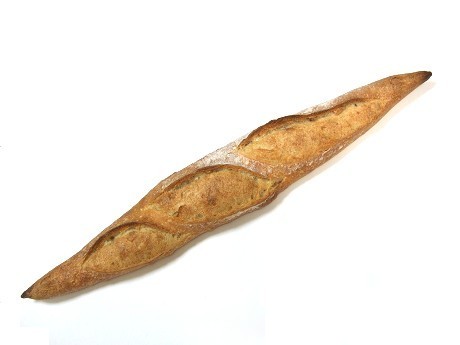
Our first introduction to French culture was through bread. Steven Kaplan, our landlord and a scholar specializing in the history of bread, met us at the apartment then took us to his favorite bakery: Dominique Saibron, on rue Alesia. Sitting at a sidewalk table, we ate tartines (a baguette sliced in half, with butter and jam on the side), while he explained to us that one of the reasons the bread was good was because it was sauvagement inscrit. Wildly inscribed. It didn’t have a honeycomb-like, regularly repeated pattern, but was unpredictable, some holes large, some small, all different shapes.

I didn’t think about it at the time, but now the Alesia Baguette, with its goal of heterogeneity and surprise, seems like an apt metaphor for Paris itself. Next time I’ll leave all preconceptions of what Parisians are like—and of what I’m expected to be like—on the plane.

Filed Under: Paris Tagged With: Alesia baguette, Dominique Saibron, Paris, Sharon Harrigan

July 30, 2012 By Sharon Harrigan

Off We Go

Tomorrow we board a plane from Charlottesville to begin our one-year sojourn in Paris.

I’m in an enviable position. I know this because people keep telling me.  Oh la la, how they wish they could come, too. Or, as my MFA thesis advisor said, when I complained about not winning a writing contest, “Buck up. You know how many people would cut off their right arms to trade places with you? Or how many want to cut off both of your arms?” It’s strange to be the object of envy. Really? You want to be like me? What I want is to be brilliant like you.

The last time I lived in Paris, I was only twenty years old, one of a legion of college students doing our junior year abroad. I brought a check for $1700, to cover six months expenses. That was a long time ago, but even with a maid’s room for $250 (seventh floor walk-up, Turkish toilet in the hall, no shower or stove, and a heater fed with coins), I would have little left over for food.  I’m bringing a little more money this time. The fact that I don’t mention how much is a measure of how privileged (and, yes, enviable) my life has become.

Filed Under: Paris Tagged With: Envy, Paris, Sharon Harrigan

July 30, 2012 By Sharon Harrigan

The Good, The Bad, and the Ugly

This could be a test. Multiple choice: A, B, or C.

You get a text message. You barely know how to use the feature, owning not only a dumb phone, but a keyboardless one. The message has only this text: “Response?”

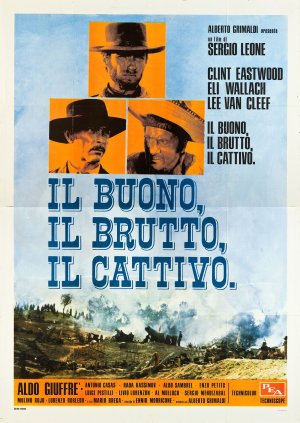
The picture to be responded to is a tattoo, which is actually text, too: “Il buono, il brutto, il cattivo.” Whose tattoo is it? The message is from your son, but the arm couldn’t be his; he just turned eighteen, doesn’t speak Italian, and is squeamish around needles.

You don’t speak Italian, either, so you plug the words into Google and read: “The Good, the Bad, and the Ugly.” A Sergio Leone film you’ve watched with your son, one of his favorites. Now you know the arm is his, but you text him back anyway, because you have to say something: “You got a tattoo?”

The words appear almost immediately, his thumbs so much faster than yours:

“Possibly.”

Your stomach starts to ache. You want to ask: Does it hurt? You can almost feel the pricks on your own skin. You want to ask why. You want to say: Are you OK? You try to think of all the things he could have done that are more dangerous, more permanent, more painful. You tell yourself you’re glad he wanted to show you.

Finally, you write back: “If you like it, I like it, too.”

“I know you must be freaking out, but I appreciate that you’re trying to act cool,” he texts. How does he know you so well? Maybe he can almost feel your stomach clench the way you can almost feel his skin prick.

“I freaked out for five minutes but now I’m cool,” you text.

“U da best,” he responds. “Love you.”

“Love you back,” you write. And you do. Of that you’re sure.

You remember being eighteen, when you vowed to always remember what it was like to be eighteen. But have you?

Possibly.

You wish you could take a phone picture of this rite of passage, this getting-under-your-skin rebellion that ended with a love note. You wish you could text it to all your friends who have parented eighteen-year-olds or been eighteen themselves, so they could tell you if you guessed the right answer to this test. You would send a picture of this milestone, or write a blog post about it, with this text at the end: “Response?”


Filed Under: Motherhood and Other Head Coverings Tagged With: Parenting, Sergio Leone, Sharon Harrigan, tattoos, The Good the Bad and the Ugly

May 5, 2012 By Sharon Harrigan

Joan Didion on Mothering

Is every generation of children less independent than the previous one? When I talk to mothers of my generation, many bemoan the way childhood has changed into an overscheduled, chaperoned, playdate-studded sanctuary. They remember whole summers when they were children, playing Mother May I, but never needing to actually ask for permission to wander their neighborhood, all day until supper.

But when I read Joan Didion’s most recent memoir, Blue Nights, I was struck by how much she thought her childhood had been free, but her daughter’s had not. Her daughter, who died recently, would have been my age.

“It so happened that I was a child during World War Two,” she says, “which meant that I grew up in circumstances in which even more stress than usual was placed on independence. . . There was a war in progress. That war did not revolve around or in any way hinge upon the wishes of children. In return for tolerating these home truths, children were allowed to invent their own lives. The notion that they could be left to their own devices—were in fact best left so—went unquestioned. Once the war was over . . . this laissez-faire approach continued.”

And she’s not just talking about children being allowed to walk to school by themselves. “I remember getting my learner’s driving permit at age fifteen-and-a-half,” she writes, “and interpreting it as a local mandate to drive from Sacramento to Lake Tahoe after dinner, two or three hours up one of the switchbacked highways into the mountains and, if you just turned around and kept driving, which was all we did, since we already had whatever we wanted to drink in the car with us, two or three hours back. This disappearance into the heart of the Sierra Nevada on what amounted to an overnight DUI went without comment from my mother and father.” It’s a wonder any of them survived to have their own children!

Her generation of parents, by contrast, are naggers and coddlers. “Parenting,” she says, “has undergone a telling transformation: we used to define success as the ability to encourage the child to grow into independent (which is to say into adult) life, to “raise” the child, to let the child go. If a child wanted to try out his or her new bicycle on the steepest hill in the neighborhood, there may have been a pro forma reminder that the steepest hill in the neighborhood descended into a four-way intersection, but such a reminder, because independence was still seen as the desired end of the day, stopped short of nagging.”

Didion is my mother’s generation, a generation that became parents not during World War II, but Vietnam. In my memory, it is my mother’s generation that encouraged independence, while my generation of parents coddles and nags. Maybe every generation feels this way. When my daughter becomes a parent, will she look back at her childhood as relatively free? Will she be wistful for the way things are today?

Filed Under: Motherhood and Other Head Coverings Tagged With: Blue Nights, Joan Didion, Parenting, Sharon Harrigan

  • « Previous Page
  • 1
  • …
  • 9
  • 10
  • 11
  • 12
  • 13
  • Next Page »

Copyright © 2026 Sharon Harrigan · Site Design: Ilsa Brink