Sharon Harrigan

Author Website

  • Bio
  • Books
    • Forthcoming
    • Half
    • Playing with Dynamite
  • News & Interviews
  • Writing
  • Editing Services
  • Blog
  • Events
  • Contact

May 8, 2015 By Sharon Harrigan

Single Dads and Terrorists

Before the Boston Marathon bombers were identified, my friend Genevieve said a prayer: “Please don’t let them be Muslims.” She is married to a Muslim man from Morocco. When they lived in America shortly after the World Trade Center bombing in 2001, he was routinely pulled aside by security officers because he “looked like a terrorist.” Now they live in Paris, and they hope that the recent shootings at the offices of Charlie Hebdo won’t cause another wave of anti-Muslim hysteria.

I hope so, too. But I know how easy it is to imagine the worst in people, once the idea that they’re dangerous is planted in our heads. It can happen to any of us. It happened to me.

Read my full essay, published in The Nervous Breakdown, here
Filed Under: Lives Lived Tagged With: Charlie Hebdo, fear-based bias, Parenting, terrorism

July 30, 2012 By Sharon Harrigan

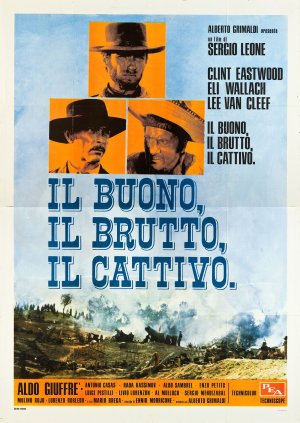
The Good, The Bad, and the Ugly

This could be a test. Multiple choice: A, B, or C.

You get a text message. You barely know how to use the feature, owning not only a dumb phone, but a keyboardless one. The message has only this text: “Response?”

The picture to be responded to is a tattoo, which is actually text, too: “Il buono, il brutto, il cattivo.” Whose tattoo is it? The message is from your son, but the arm couldn’t be his; he just turned eighteen, doesn’t speak Italian, and is squeamish around needles.

You don’t speak Italian, either, so you plug the words into Google and read: “The Good, the Bad, and the Ugly.” A Sergio Leone film you’ve watched with your son, one of his favorites. Now you know the arm is his, but you text him back anyway, because you have to say something: “You got a tattoo?”

The words appear almost immediately, his thumbs so much faster than yours:

“Possibly.”

Your stomach starts to ache. You want to ask: Does it hurt? You can almost feel the pricks on your own skin. You want to ask why. You want to say: Are you OK? You try to think of all the things he could have done that are more dangerous, more permanent, more painful. You tell yourself you’re glad he wanted to show you.

Finally, you write back: “If you like it, I like it, too.”

“I know you must be freaking out, but I appreciate that you’re trying to act cool,” he texts. How does he know you so well? Maybe he can almost feel your stomach clench the way you can almost feel his skin prick.

“I freaked out for five minutes but now I’m cool,” you text.

“U da best,” he responds. “Love you.”

“Love you back,” you write. And you do. Of that you’re sure.

You remember being eighteen, when you vowed to always remember what it was like to be eighteen. But have you?

Possibly.

You wish you could take a phone picture of this rite of passage, this getting-under-your-skin rebellion that ended with a love note. You wish you could text it to all your friends who have parented eighteen-year-olds or been eighteen themselves, so they could tell you if you guessed the right answer to this test. You would send a picture of this milestone, or write a blog post about it, with this text at the end: “Response?”


Filed Under: Motherhood and Other Head Coverings Tagged With: Parenting, Sergio Leone, Sharon Harrigan, tattoos, The Good the Bad and the Ugly

May 5, 2012 By Sharon Harrigan

Joan Didion on Mothering

Is every generation of children less independent than the previous one? When I talk to mothers of my generation, many bemoan the way childhood has changed into an overscheduled, chaperoned, playdate-studded sanctuary. They remember whole summers when they were children, playing Mother May I, but never needing to actually ask for permission to wander their neighborhood, all day until supper.

But when I read Joan Didion’s most recent memoir, Blue Nights, I was struck by how much she thought her childhood had been free, but her daughter’s had not. Her daughter, who died recently, would have been my age.

“It so happened that I was a child during World War Two,” she says, “which meant that I grew up in circumstances in which even more stress than usual was placed on independence. . . There was a war in progress. That war did not revolve around or in any way hinge upon the wishes of children. In return for tolerating these home truths, children were allowed to invent their own lives. The notion that they could be left to their own devices—were in fact best left so—went unquestioned. Once the war was over . . . this laissez-faire approach continued.”

And she’s not just talking about children being allowed to walk to school by themselves. “I remember getting my learner’s driving permit at age fifteen-and-a-half,” she writes, “and interpreting it as a local mandate to drive from Sacramento to Lake Tahoe after dinner, two or three hours up one of the switchbacked highways into the mountains and, if you just turned around and kept driving, which was all we did, since we already had whatever we wanted to drink in the car with us, two or three hours back. This disappearance into the heart of the Sierra Nevada on what amounted to an overnight DUI went without comment from my mother and father.” It’s a wonder any of them survived to have their own children!

Her generation of parents, by contrast, are naggers and coddlers. “Parenting,” she says, “has undergone a telling transformation: we used to define success as the ability to encourage the child to grow into independent (which is to say into adult) life, to “raise” the child, to let the child go. If a child wanted to try out his or her new bicycle on the steepest hill in the neighborhood, there may have been a pro forma reminder that the steepest hill in the neighborhood descended into a four-way intersection, but such a reminder, because independence was still seen as the desired end of the day, stopped short of nagging.”

Didion is my mother’s generation, a generation that became parents not during World War II, but Vietnam. In my memory, it is my mother’s generation that encouraged independence, while my generation of parents coddles and nags. Maybe every generation feels this way. When my daughter becomes a parent, will she look back at her childhood as relatively free? Will she be wistful for the way things are today?

Filed Under: Motherhood and Other Head Coverings Tagged With: Blue Nights, Joan Didion, Parenting, Sharon Harrigan

Copyright © 2026 Sharon Harrigan · Site Design: Ilsa Brink