Sharon Harrigan

Author Website

  • Bio
  • Books
    • Forthcoming
    • Half
    • Playing with Dynamite
  • News & Interviews
  • Writing
  • Editing Services
  • Blog
  • Events
  • Contact

May 5, 2012 By Sharon Harrigan

Joan Didion on Mothering

Is every generation of children less independent than the previous one? When I talk to mothers of my generation, many bemoan the way childhood has changed into an overscheduled, chaperoned, playdate-studded sanctuary. They remember whole summers when they were children, playing Mother May I, but never needing to actually ask for permission to wander their neighborhood, all day until supper.

But when I read Joan Didion’s most recent memoir, Blue Nights, I was struck by how much she thought her childhood had been free, but her daughter’s had not. Her daughter, who died recently, would have been my age.

“It so happened that I was a child during World War Two,” she says, “which meant that I grew up in circumstances in which even more stress than usual was placed on independence. . . There was a war in progress. That war did not revolve around or in any way hinge upon the wishes of children. In return for tolerating these home truths, children were allowed to invent their own lives. The notion that they could be left to their own devices—were in fact best left so—went unquestioned. Once the war was over . . . this laissez-faire approach continued.”

And she’s not just talking about children being allowed to walk to school by themselves. “I remember getting my learner’s driving permit at age fifteen-and-a-half,” she writes, “and interpreting it as a local mandate to drive from Sacramento to Lake Tahoe after dinner, two or three hours up one of the switchbacked highways into the mountains and, if you just turned around and kept driving, which was all we did, since we already had whatever we wanted to drink in the car with us, two or three hours back. This disappearance into the heart of the Sierra Nevada on what amounted to an overnight DUI went without comment from my mother and father.” It’s a wonder any of them survived to have their own children!

Her generation of parents, by contrast, are naggers and coddlers. “Parenting,” she says, “has undergone a telling transformation: we used to define success as the ability to encourage the child to grow into independent (which is to say into adult) life, to “raise” the child, to let the child go. If a child wanted to try out his or her new bicycle on the steepest hill in the neighborhood, there may have been a pro forma reminder that the steepest hill in the neighborhood descended into a four-way intersection, but such a reminder, because independence was still seen as the desired end of the day, stopped short of nagging.”

Didion is my mother’s generation, a generation that became parents not during World War II, but Vietnam. In my memory, it is my mother’s generation that encouraged independence, while my generation of parents coddles and nags. Maybe every generation feels this way. When my daughter becomes a parent, will she look back at her childhood as relatively free? Will she be wistful for the way things are today?
Filed Under: Motherhood and Other Head Coverings Tagged With: Blue Nights, Joan Didion, Parenting, Sharon Harrigan

April 3, 2012 By Sharon Harrigan

Blanket Bear


When you want to dig deep into your past and unearth essential truths, what do you do if you’re only eight years old? My daughter just wrote the mini personal essay below, about the day after she was born. No pseudonyms or composite characters were used. Some of the facts, however, may be secondhand or slightly anthropomorphized. Stay tuned for the next installments, backstories about each plush animal she has ever loved, hated, or remained completely indifferent about.

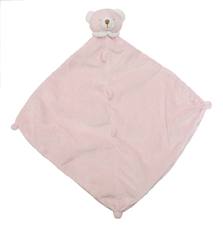
Blanket Bear was old, the oldest resident in Ella’s toybox, and all the toys respected her for it. The day after Ella was born, Blanket Bear had come, a gift from Aunt Mary. Blanket Bear, who had always shown great affection for her girl, was seldom taken out of the toybox. She had all the other stuffed animals to play with, so you shouldn’t judge Ella too harshly. Blanket Bear will never forget Ella’s face when she arrived: so peaceful. Her mother unwrapped her box and gently set Blanket Bear down into the crib. Ella didn’t wake up, only circled her hand around her. Blanket Bear was one of Ella’s comforts, more than she’ll ever realize. Just knowing that Blanket Bear is there is a certain consolation, even now. You don’t check to see if your heart is beating. It just is. Just like Blanket Bear, you take it for granted, but that doesn’t make it any less necessary. Blanket Bear or your heart.

Filed Under: Motherhood and Other Head Coverings Tagged With: blanket bears, blankies, personal essays, Sharon Harrigan, stuffed animals

February 13, 2012 By Sharon Harrigan

Valentine’s Day Odyssey


“We have a lot to live up to if we’re going to be a model couple,” my husband James said after comments from two friends. One, about ten years my junior, told us she and her husband want to be like us “when they grow up.”

The other comparison—a far more common one—was from a man whose marriage is starting to end. He said he looks at James and me, both divorced and happily remarried, and sees his future.

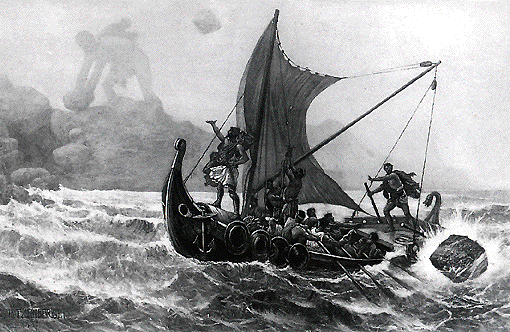
Our marriage is a fairy tale to me, still. It’s also the end of an odyssey fraught with monsters.

Neither of these two friends knew my ex-husband, who, after my son was born, spiraled into agoraphobia, manic depression, and panic disorder. Who stopped working and racked up debt and became afraid to be alone. Who threatened to kill himself if I left. Who clung to me like I was a life raft, even though I knew if I stayed we both would drown.

Like Odysseus, I finally found my way home. And here I am, in a marriage almost ten years old, which produced a daughter whose entire life is calm seas and fair weather.

Happy Valentines Day, sweet child. May you and your future husband be like us when you grow up, too. Though may God, Zeus, or your own good sense spare you the journey that landed us here.

Filed Under: Motherhood and Other Head Coverings Tagged With: divorce, marriage, remarriage, The Odyssey, Valentine's Day

February 3, 2012 By Sharon Harrigan

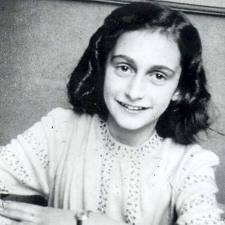
Reading Anne: Lessons on Bloody War and Underwear

“The Nazis are good now,” my eight-year-old daughter Ella half asked, half said.

“No, the Nazis are still bad. But the Germans are good.”

“That’s what I meant,” she said.

World War II was still an abstraction to her. It didn’t have the human connection that would make it real. It was time to read Anne Frank.

We finished The Diary of a Young Girl last night, and although the book is so famous it has almost become a cliché, its painful, hopeful beauty startled me. I expected to have to explain words like D-Day and Gestapo, to tell Ella about the horrors of Auchwitz and the evils of anti-Semitism. But I didn’t realize I would have to teach her about puberty.

Anne lived in the Secret Annexe from the ages of twelve to fifteen, and the timing of her period is a frequent topic. (“What’s a period?” Ella asked, in the same breath as “What’s an invasion?”) Anne is mostly cheerful and even keeled, but she also becomes a rebellious teenager, writing a letter to father saying that she is responsible to no one and will no longer obey him.

In our minds, Anne will always be a teenager, because her life was cut short. Thanks to her book, both my daughter and I grew up a little bit, ourselves.

Filed Under: Motherhood and Other Head Coverings Tagged With: adolescence, Anne Frank, Sharon Harrigan, The Diary of a Young Girl, World War II

January 26, 2012 By Sharon Harrigan

Why Kids Shouldn’t Read Grown-Up Books—Or Maybe They Should


Yesterday I was at the public library with my eight-year-old daughter, Ella, looking for information on French culture for a school report. The librarian found one book on the juvenile shelves then gave us a call number for a book in the adult section. Ella wanted to read the adult book immediately, so we installed ourselves around the only empty table in the children’s section and she opened the book to the middle. “I don’t know why this was in the grown-up section,” Ella said.

“Because it’s for grown-ups,” I said. Although I wondered, too—for about thirty seconds.

Because the next thing Ella said was: “What is A-B-O-R-T-I-O-N?

“What?” I said. Not that I couldn’t spell.

“ABORTION!” Ella shouted, as if my only problem was that I couldn’t hear. All heads—from toddlers to tweens, their parents, and every librarian—turned to see what I would say. Or maybe they were just wondering what kind of mother would let her eight-year-old read a book about abortion.

I pulled the book to my side of the table. She had opened it to the chapter on “Courtship and Marriage” and was reading about how changing views on the Catholic Church in France have affected abortion practices and therefore birth rates. “That’s why this book is for grown-ups,” I said.

“But what does abortion mean?” she persisted.

“I don’t want to tell you.” Those were my exact words, juvenile and stubborn, like a playground taunt. Ella pouted, of course now more curious than ever. I scooped up the book and told her it was time to go home.

But why didn’t I tell her? I don’t think it was just because it seemed like my entire town was watching or that I was afraid the two- and three-year-olds would look up from their Very Hungry Caterpillars and become prematurely sex-starved.

Maybe I didn’t tell her because the word means so many different things to so many different people. But if I don’t provide Ella with my version, she’ll fill the void with rumor and misinformation.

She’s bound to hear the word during the presidential campaign. I remember canvassing in my neighborhood for local and national politicians and hearing some people tell me, from behind their screen doors, that abortion was the one issue they considered when choosing a candidate. I sometimes take Ella canvassing with me, and I don’t want her to have abortion explained to her by angry Tea Partiers.

I don’t remember explaining abortion to my son, since it fell to my husband to give him the “sex talk.” What I do recall is discussing the book Freakonomics with my son when he was thirteen, including the chapter that explains the drop in crime rate as a link to Roe versus Wade (fewer crimes were committed because fewer criminals had been born).

No matter what side of the political spectrum you’re are on, abortion is not a happy subject to talk to your children about. Part of me is sad that I can’t keep Ella innocent of it forever. But the other part of me realizes it’s my duty to keep her informed. Now if I could just figure out what I’m going to say.

Filed Under: Motherhood and Other Head Coverings Tagged With: abortion, children reading grown-up books, French culture and customs, Sharon Harrigan

  • « Previous Page
  • 1
  • 2
  • 3
  • 4
  • 5
  • Next Page »

Copyright © 2026 Sharon Harrigan · Site Design: Ilsa Brink